
Projector Buying Guide: How to Choose the Right Projector for Your Home Theatre
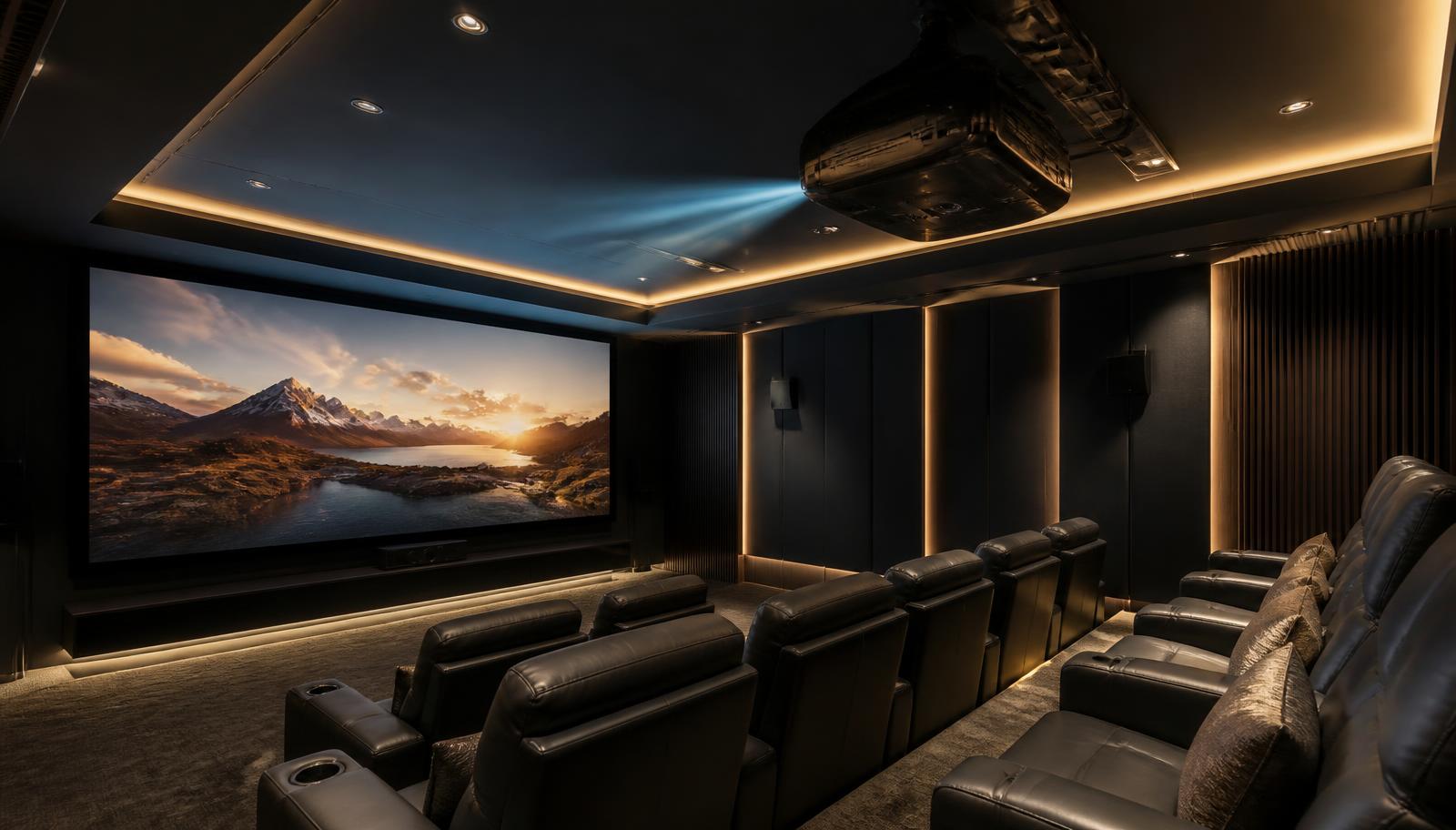
Quick answer — how to choose a home theatre projector
Choosing a projector is not about buying the highest resolution or the most lumens. The right projector depends on room size, viewing distance, screen size, ambient light, resolution, projector technology, installation position and the rest of your home theatre system. A projector that is perfect in a dedicated dark cinema room can be the wrong choice for a bright living room.
Start with the room, not the product. Measure the space, fix the screen size and seating distance, assess how much daylight you can control, then select projector brightness, technology and throw type to suit. Finally, choose the screen and the audio system as part of the same design — never as an afterthought.
Key takeaways (TL;DR)
- ▸
Brightness
1,800–2,500 ANSI lumens for a dark theatre; 2,500–3,500 for a living room; 4,000+ for offices and auditoriums.
- ▸
Resolution
Full HD is sufficient for basic entertainment; 4K UHD is worth it on large screens and short viewing distances.
- ▸
Throw distance
Throw Ratio = Projector Distance ÷ Screen Width. Confirm it before you finalise the room layout.
- ▸
Lens shift beats keystone correction
optical positioning preserves image quality, digital correction degrades it.
- ▸
Light source
lamp ≈ 3,000–6,000 hours, LED ≈ 20,000 hours, laser ≈ 20,000–30,000 hours with instant on/off and low maintenance.
- ▸
Screen matters as much as the projector
even a premium 4K laser projector underperforms on a bare or glossy wall.
- ▸
UST projectors suit living rooms with limited depth; conventional projectors suit dedicated cinema rooms.
- ▸
Built-in speakers are for casual use
a real home theatre needs an AV receiver and a surround system.
Why choose a projector for a home theatre?
The single biggest advantage of a projector is scale — a projection system creates a viewing experience far larger than a conventional television, at a fraction of the cost per diagonal inch. A projector receives an input signal from a source such as HDMI or a wireless device, processes it through its imaging system and lens, and displays the image on a projection screen or a suitable surface.
That makes projection ideal for dedicated home theatres, living-room cinemas, media rooms, gaming rooms, sports viewing, movie rooms and commercial presentation spaces. But to get the best result, the projector and the screen must be selected together as one system.
1. Projector brightness — how many lumens do you need?
Brightness is the most consequential specification in projector selection, and it is commonly expressed in ANSI lumens. The requirement depends heavily on the environment the projector will work in.
| Environment | Typical brightness range |
|---|---|
| Dark home theatre | 1,800 – 2,500 ANSI lumens |
| Living room | 2,500 – 3,500 ANSI lumens |
| Classroom | 3,500 – 4,500 ANSI lumens |
| Meeting room / office | 4,000 – 6,000 ANSI lumens |
| Auditorium | 6,000+ ANSI lumens |
What if your living room has daylight?
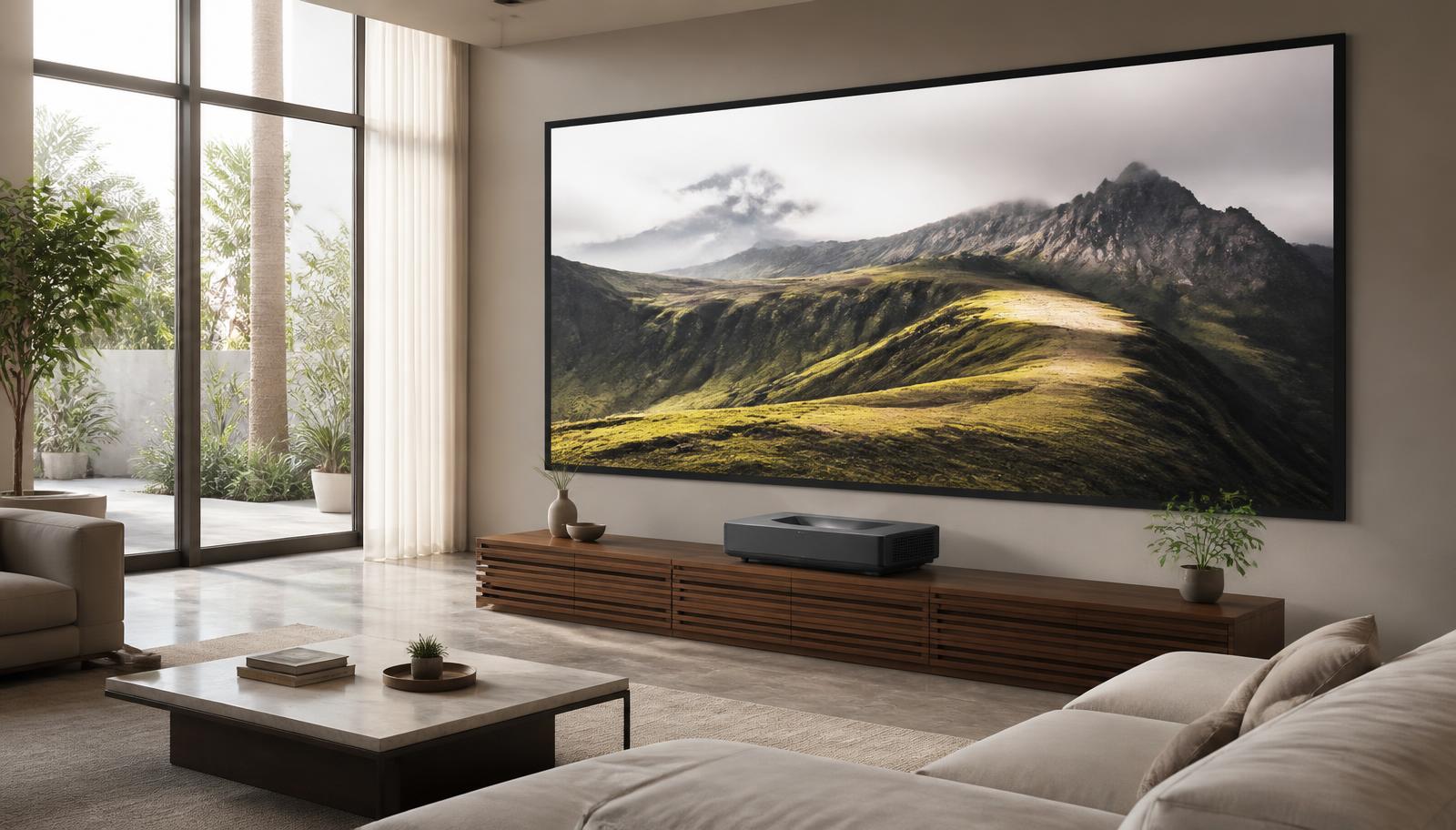
You do not necessarily need a completely dark room. For rooms with ambient light, a suitable high-brightness projector combined with an Ambient Light Rejecting (ALR) screen delivers a far better viewing experience than brightness alone. This is particularly useful for living-room installations where blocking daylight completely is impractical.
2. Projector resolution — Full HD or 4K?
Resolution determines how much detail the projector can display. It should never be judged in isolation — projector, screen, room, viewing distance and source quality together decide the final picture.
| Resolution | Pixels | Best suited to |
|---|---|---|
| WXGA | 1280 × 800 | Basic presentation and educational use |
| Full HD | 1920 × 1080 | Home theatre and everyday entertainment |
| WUXGA | 1920 × 1200 | Business and office applications |
| 4K UHD | 3840 × 2160 | Premium home theatre with large screens |
| Native 4K | 4096 × 2160 class | High-end cinema rooms where picture quality is critical |
3. Throw distance — how far should the projector sit from the screen?
Ignoring throw distance is the most common and most expensive mistake buyers make. Throw distance is the distance between the projector lens and the projection screen, and it is expressed as a throw ratio: Throw Ratio = Projector Distance ÷ Screen Width.
A conventional projector may need several metres of distance to produce a large image, while a short-throw or ultra-short-throw projector produces the same image from far closer.
- ▸
Regular projector
installed farther from the screen, usually ceiling-mounted or placed towards the rear of the room.
- ▸
Short-throw projector
produces a large image from a shorter distance, useful in mid-sized rooms.
- ▸
Ultra short throw (UST)
sits very close to the screen, often on a TV cabinet or dedicated console, ideal where room depth is limited.
4. Keystone correction vs lens shift
Keystone correction digitally adjusts the image when the projector is not perpendicular to the screen. It is convenient, but the digital correction resamples the image and can visibly soften it.
Lens shift moves the projected image optically, without altering the image data. For premium home theatre installations, lens shift is generally preferable where available, because it allows flexible projector positioning while preserving image quality.
5. DLP vs LCD vs LCoS projectors
There is no universal winner. The right technology depends on your room, budget, content, screen size and the picture quality you are targeting.
| Technology | Key advantage | Common applications |
|---|---|---|
| DLP | Sharp image, good motion performance, reliability | Home theatre, business, education |
| LCD / 3LCD | Strong colour brightness | Offices, education, presentations |
| LCoS | Excellent black levels, premium cinema performance | High-end home theatre |
6. Lamp vs LED vs laser projectors
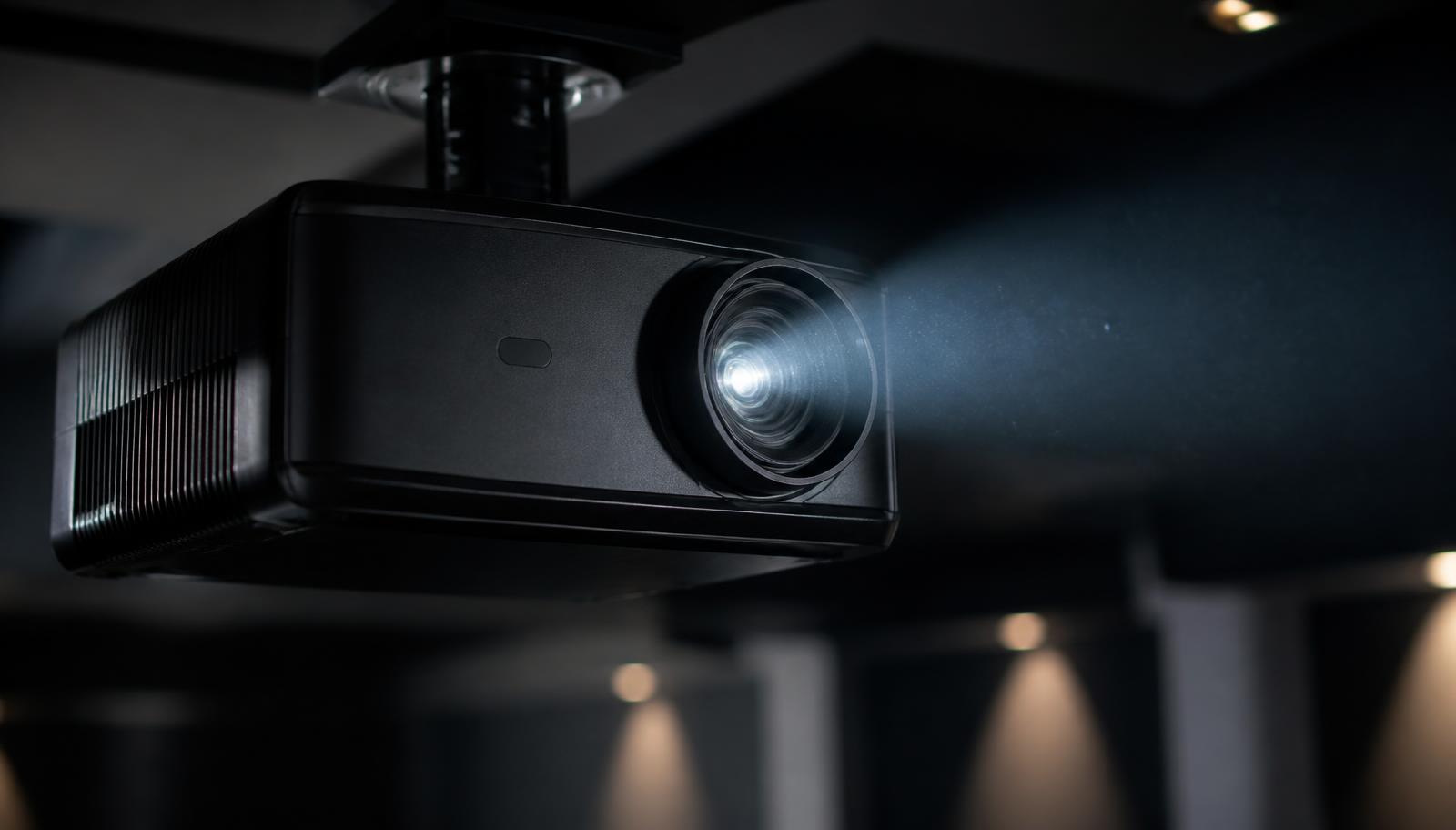
The light source decides running cost, maintenance and long-term picture consistency. Lamp projectors have a lower initial purchase price, but lamps have a limited operating life — typically around 3,000–6,000 hours — and eventually need replacement. LED light sources generally require less maintenance and offer roughly 20,000 hours of life.
Laser projectors are increasingly the default for premium home theatres: high brightness, good colour performance, instant on/off, low maintenance and approximately 20,000–30,000 hours of laser engine life. For a projector that will be used frequently, laser is usually the better long-term economics.
7. The screen is as important as the projector
Do not choose the projector independently of the screen. A high-quality projector can still produce disappointing results on an unsuitable screen or a poor projection surface — even a premium 4K laser projector will underperform when projected onto a bare or glossy wall.
- ▸
Projector brightness
the screen gain must complement the lumens, not fight them.
- ▸
Room lighting
ALR material for living rooms; matte white or grey for controlled dark rooms.
- ▸
Screen size and seating distance
decided together, not separately.
- ▸
Throw distance and projector type
UST screens are specifically engineered for steep-angle light.
- ▸
Seating arrangement
wide seating layouts need wider half-gain viewing angles.
8. How to choose the right projector for your room
Before buying a projector, start with the room — not the product. Work through these ten inputs and the specification will narrow itself down.
- ▸
Room dimensions
measure length, width and ceiling height.
- ▸
Viewing distance
how far the primary seating row sits from the screen.
- ▸
Desired screen size
100-inch, 120-inch, 150-inch or a larger cinema screen.
- ▸
Ambient light
completely dark, moderately lit or a bright living room.
- ▸
Budget
plan for the complete system, not the projector alone.
- ▸
Resolution
Full HD, 4K UHD or a higher-end native 4K solution.
- ▸
Light source
lamp, LED or laser.
- ▸
Installation
ceiling mount, wall mount, tabletop or UST console.
- ▸
Audio
built-in speakers, soundbar, AV receiver, 5.1, 7.1 or Dolby Atmos.
- ▸
Usage
movies, sports, gaming, OTT streaming, presentations or mixed use.
9. Can you connect Netflix, a gaming console or your phone?
Modern projectors connect to streaming devices, gaming consoles, laptops, media players, set-top boxes and other HDMI sources. Many smart projectors also include wireless connectivity and built-in streaming apps.
For gaming, don't judge on resolution alone. Input latency, refresh capability and connectivity matter more to how the system actually feels in play.
10. Do you need external speakers with a projector?
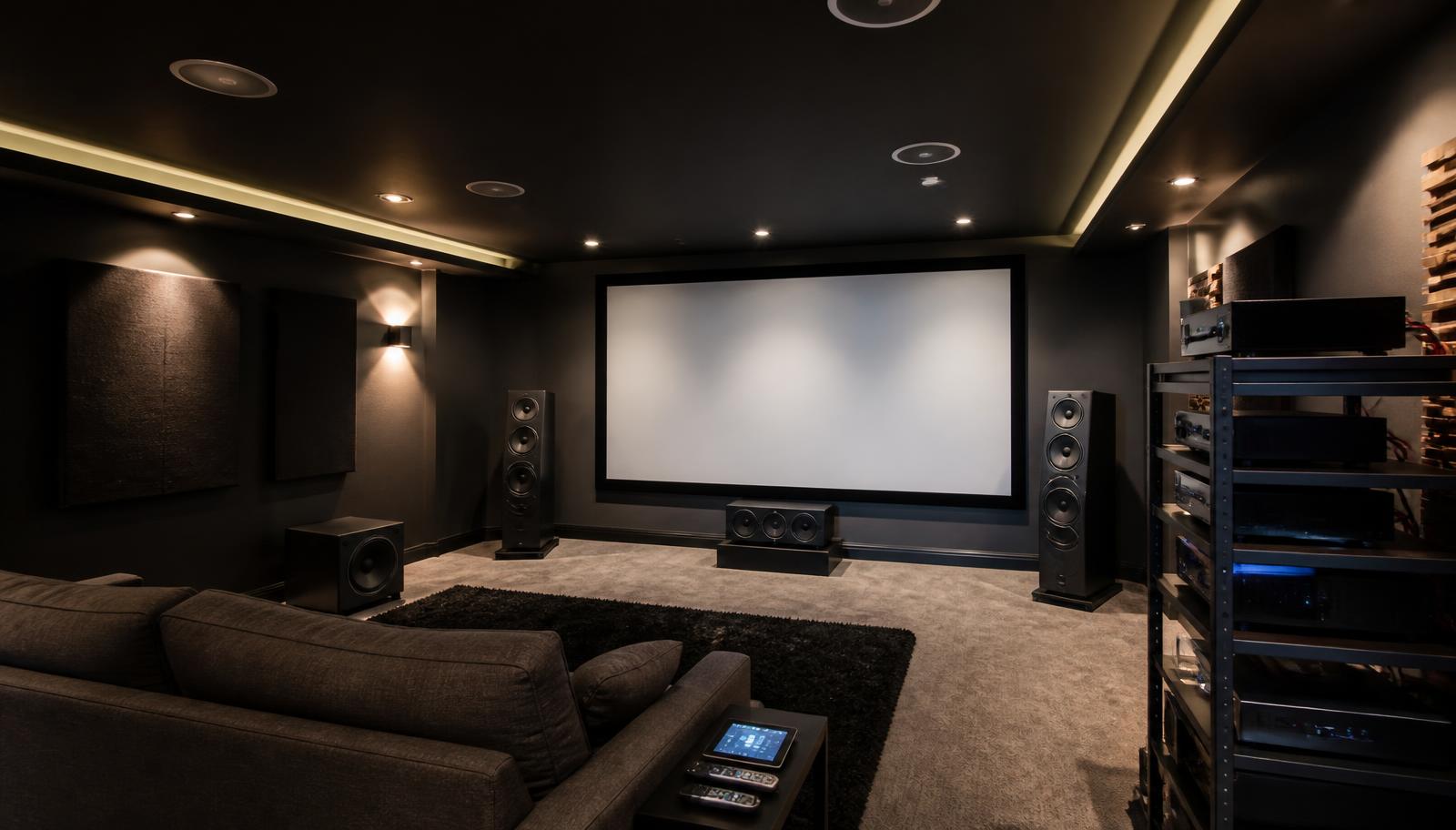
A projector may include built-in speakers, but those are intended for basic use. For a genuine home theatre experience, a dedicated audio system is essential. A typical premium chain runs: projector → AV receiver → front speakers + centre speaker + surround speakers + subwoofer + Atmos height speakers.
This is a completely different experience from projector audio — dialogue anchors to the screen, effects move around the room and bass has weight instead of thinness.
11. Regular projector vs UST projector — which should you choose?
- ▸
Choose a conventional projector
when you have a dedicated theatre room, sufficient throw distance, the ability to ceiling-mount and want a traditional cinema configuration.
- ▸
Choose a UST projector
when installing in a living room, when room depth is limited, when you don't want a ceiling-mounted unit, and when you prefer a cleaner, cable-light installation close to the screen.
12. Ten questions to ask before buying a projector
- ▸
What will the projector primarily be used for?
- ▸
What are the room dimensions?
- ▸
What is the viewing distance?
- ▸
What screen size do you want?
- ▸
How much ambient light is present?
- ▸
What is your complete system budget?
- ▸
Do you need Full HD or 4K?
- ▸
Should you choose lamp, LED or laser?
- ▸
How will the projector be installed?
- ▸
What audio system will be used?
Final thoughts — buy a projection system, not a projector
The question should not be 'which is the best projector?' but 'what is the best projection system for my room?' Room size, viewing distance, screen size, ambient light, projector technology, resolution, installation method and audio all have to work together.
At LiveInSmart, the best home theatre is never simply a collection of expensive products — it is a properly designed system in which projector, screen, audio, acoustics and room work as one. Whether you are planning a dedicated cinema, upgrading a living room or building a premium entertainment space, talk to our specialists or visit an experience centre in Hyderabad or Vijayawada for a configuration matched to your room.
Frequently asked questions
Do I need a completely dark room for a projector?+
Not necessarily. A dark room gives the most cinematic result, but a suitable high-brightness projector paired with an ambient light rejecting (ALR) screen makes projection entirely practical in living rooms with daylight.
Is 4K necessary for a home theatre?+
Not every room needs it. The ideal resolution depends on screen size, viewing distance, content and budget. For premium large-screen home theatres with close seating, 4K is a clear upgrade; for a modest screen viewed from a distance, Full HD can be sufficient.
Is a laser projector better than a lamp projector?+
Laser projectors offer long operating life (roughly 20,000–30,000 hours), low maintenance and instant on/off. Lamp projectors cost less upfront but need lamp replacement every 3,000–6,000 hours, which changes the total cost of ownership.
Is a UST projector better than a normal projector?+
Neither is universally better. A conventional projector excels in dedicated cinema rooms with proper throw distance, while a UST projector is far more convenient for living rooms with limited depth or where ceiling mounting isn't desirable.
Can I use a wall instead of a projector screen?+
You can, but wall texture, colour and sheen significantly degrade contrast and colour accuracy. For a properly designed home theatre, the projector and screen should always be specified together.
Does a projector need a separate sound system?+
For casual viewing or presentations, built-in speakers may be enough. For a dedicated home theatre, an AV receiver with a surround or Dolby Atmos speaker system delivers a dramatically more immersive result.
How many lumens do I need for a home theatre projector?+
Around 1,800–2,500 ANSI lumens for a dark dedicated theatre, and 2,500–3,500 ANSI lumens for a living room with some ambient light. Screen size, screen material and projector technology can shift these figures.
What is throw ratio and why does it matter?+
Throw ratio = projector distance ÷ screen width. It determines whether your chosen projector can actually produce your target screen size from the position available in your room — check it before finalising the room layout or ordering hardware.
Related on LiveInSmart
22 min read
Acoustic Treatment — The Complete 2026 Guide for Homes, Studios, Offices, Auditoriums & Commercial Spaces in India
8 min read
Home Theatre Installation Cost in Hyderabad & Vijayawada — 2026 Buyer's Guide
10 min read
How to Design a Dedicated Dolby Atmos Home Theatre in Hyderabad: The 2026 Checklist