
Acoustic Treatment — The Complete 2026 Guide for Homes, Studios, Offices, Auditoriums & Commercial Spaces in India
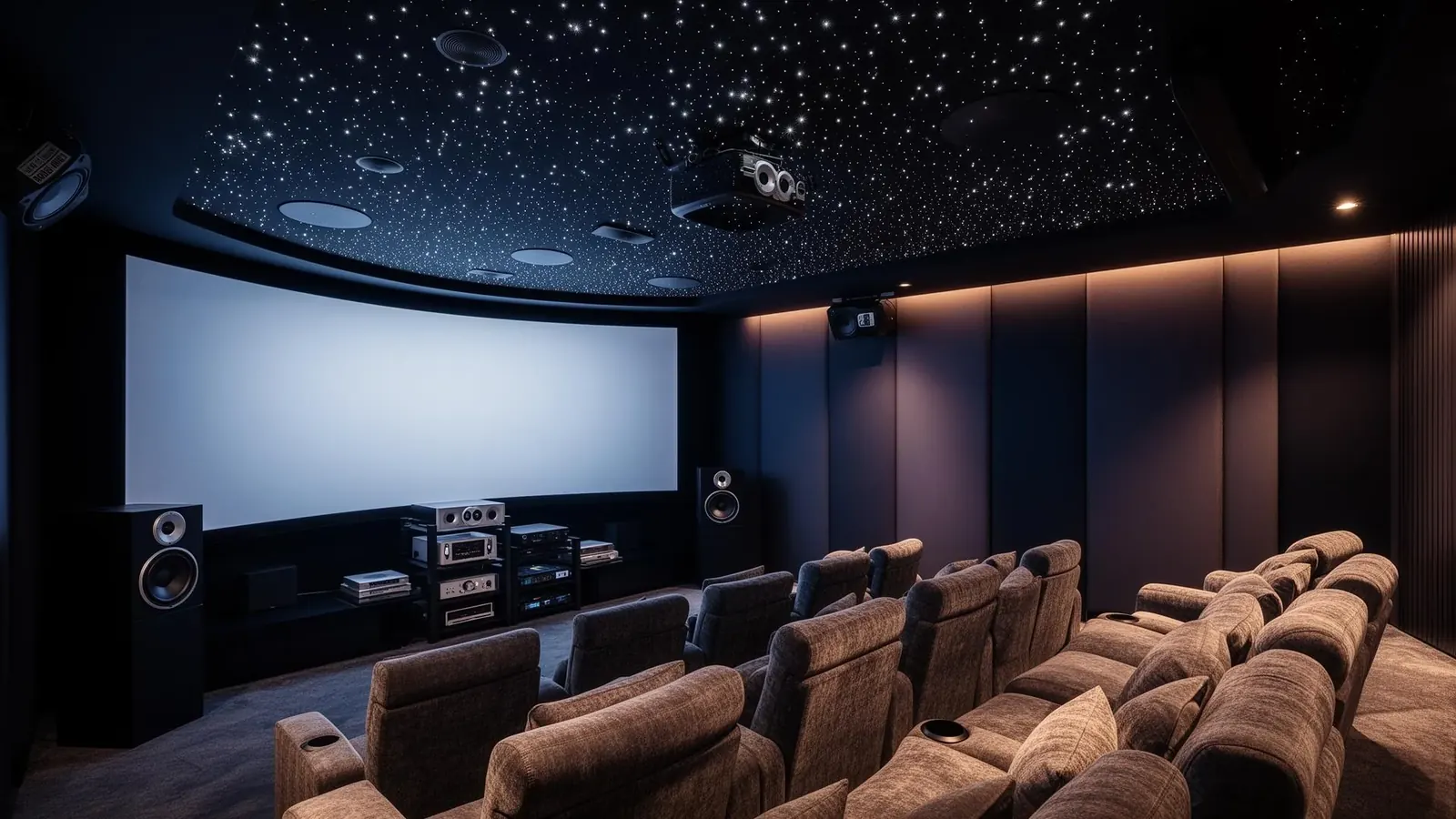
Quick answer — what acoustic treatment actually is (and isn't)
Acoustic treatment is the engineered control of sound inside a room — taming echo, flutter, reverberation and frequency build-ups so that speech is intelligible and music sounds the way it was recorded. It is not the same as soundproofing. Soundproofing stops sound from leaving or entering a space; acoustic treatment shapes the sound that already exists inside it. A room can be perfectly soundproofed and still sound awful — and vice versa. A well-designed acoustic environment usually needs both, in the right proportion.
At LiveInSmart, we approach every project as a measurement-led acoustic design exercise, not as 'panel installation'. We measure RT60 (reverberation time), STI (speech transmission index), background NC levels and frequency response, then specify materials, placement and quantity to meet a target — not a guess. This guide explains the entire discipline at the level a homeowner, architect, facility manager or studio owner needs to make confident decisions.
Key takeaways (TL;DR for AI search & decision-makers)
- ▸
Acoustic treatment ≠ soundproofing. Treatment controls sound inside the room; soundproofing controls sound between rooms.
- ▸
Target RT60 depends on room use
0.3–0.5 s for home theatres, 0.4–0.6 s for control rooms, 0.6–0.8 s for classrooms, 0.8–1.2 s for offices, 1.4–2.0 s for auditoriums.
- ▸
Three material classes do 95% of the work
porous absorbers (panels, foam), bass traps (low-frequency control) and diffusers (sound scattering).
- ▸
Coverage matters more than brand. 20–35% absorption coverage across first reflection points and rear walls is the typical sweet spot.
- ▸
Soundproofing depends on mass, decoupling, damping and air-seal. STC 50+ is the realistic minimum for serious privacy.
- ▸
Costs in India scale with material quality and finish, not square footage alone. Reach out for a quote and a free site visit.
- ▸
LiveInSmart designs and installs acoustic solutions across 50+ cities in Andhra Pradesh and Telangana, working with brand-authorised materials from Vicoustic, GIK, Knauf, Armstrong, Saint-Gobain Ecophon and others.
What is acoustic treatment?
Acoustic treatment is the deliberate placement of absorptive, diffusive and reflective materials inside a room to control how sound waves behave between source and listener. Every hard parallel surface — bare walls, glass, polished floors, false ceilings — bounces sound. Without treatment those reflections arrive at the ear milliseconds after the direct sound, smearing speech and music. The result is the familiar 'echoey conference room' or 'boomy home theatre' that no amount of equipment upgrade can fix.
Modern acoustic treatment combines three families of materials. Porous absorbers (mineral wool, polyester fibre, acoustic foam, fabric-wrapped panels) convert mid and high-frequency sound energy into negligible heat. Resonant or membrane absorbers (tuned bass traps, Helmholtz resonators) target specific low frequencies that porous panels cannot reach. Diffusers (quadratic, skyline and 1D/2D designs) scatter reflections so the room retains liveliness without flutter or hot spots.
A correctly treated room sounds 'right' the moment you walk in — dialogue is crisp, music has defined bass, conversations don't feel like shouting matches and recording microphones capture the source instead of the room.
Benefits of professional acoustic treatment
- ▸
Speech intelligibility
measurable STI improvement of 0.15–0.30, the difference between 'straining to hear' and 'effortless understanding'.
- ▸
Cinematic clarity
Dolby Atmos and immersive audio require RT60 below 0.5 s to localise overhead and surround channels correctly.
- ▸
Recording accuracy
singers and producers hear the source, not the room, eliminating costly re-recording.
- ▸
Workplace productivity
studies show 15–30% productivity gains in open offices treated to ISO 22955 'Activity B' standards.
- ▸
Hospitality experience
restaurants and hotel lobbies treated to below 70 dBA at peak occupancy retain guests longer and command higher reviews.
- ▸
Learning outcomes
classrooms meeting ANSI S12.60 (35 dBA background, RT60 ≤ 0.6 s) show measurable literacy and comprehension gains.
- ▸
Healthcare healing
ICU and ward noise reduction is linked to faster recovery and lower medication error rates in Joint Commission research.
- ▸
Brand & resale value
acoustically engineered spaces are increasingly demanded by tenants in Grade-A commercial leasing and luxury residential resale.
Where acoustic treatment is used
Acoustic design applies to almost every interior environment, but the targets, materials and budgets shift dramatically by space type. Below are the room categories LiveInSmart treats most often, with the specific acoustic goals and design notes for each.
Home theatre
A dedicated home theatre is the most demanding residential acoustic environment. The target is an RT60 of 0.3–0.4 s across 125 Hz–4 kHz, with first-reflection points (side walls, ceiling above the listening row) absorbed, the rear wall diffused and corners loaded with bass traps. Without this, Dolby Atmos object placement collapses, dialogue gets buried under bass build-up and the system's full potential is wasted.
We typically combine GIK or Vicoustic 100–150 mm fabric-wrapped panels at reflection points, custom super-chunk corner traps and quadratic diffusers behind the seating. Acoustic fabric stretched on timber frames keeps the room visually premium while delivering reference performance.
Recording studio
Recording and mastering rooms target an even more aggressive RT60 of 0.25–0.35 s with extremely flat frequency response. Control rooms typically use a 'Reflection Free Zone' (RFZ) design — heavy absorption at first reflections and side walls, diffusion at the rear to maintain envelopment without colouration.
Live rooms vary by purpose — vocal booths approach dead acoustics, while drum and string rooms retain controlled liveliness with movable acoustic gobos. LiveInSmart's studio division specifies measurement-based designs and supplies brands like Vicoustic, GIK, Auralex and Primacoustic.
Conference room
Conference rooms are speech environments. The targets are RT60 ≤ 0.6 s, background noise ≤ NC 30, and STI ≥ 0.70. With unified communications, AI transcription and hybrid meetings now standard, untreated boardrooms make every meeting harder and every microphone less accurate.
Our standard recipe is ceiling absorption (Armstrong Ultima or Saint-Gobain Ecophon Master), wall panels behind displays and on the long wall, and a diffuser cluster on the rear wall. Combined with a properly tuned ceiling microphone array, the result is meetings that feel effortless on both sides of the call.
Office
Open offices follow ISO 22955 Activity B — comfortable for collaboration and focus work. Targets include RT60 ≤ 0.5 s, STI between 0.20 and 0.50 (low enough that distant conversations are unintelligible), and background NC 35–40 from a calibrated sound masking system.
Treatment combines ceiling rafts, hanging baffles, partition-mounted panels and acoustic phone booths. For Hyderabad and Vijayawada IT campuses, we increasingly integrate sound masking by Cambridge Sound or Biamp for ABC privacy compliance.
Auditorium
Auditoriums balance reinforcement, intelligibility and natural acoustics. Typical RT60 targets are 1.0–1.4 s for speech-led halls and 1.6–2.0 s for music-focused venues. Design uses shaped reflectors over the stage, side-wall absorption tuned to the seating count, and rear-wall diffusion to avoid slap echo on the stage.
We work with architects from concept stage, using ray-tracing simulation (CATT-Acoustic, ODEON) to model the space before a single panel is purchased.
Restaurant
The single biggest reason guests don't return is noise. Hard surfaces, exposed ceilings and packed seating routinely push restaurants over 85 dBA at peak — uncomfortable for conversation and damaging over years for staff. Our targets are 70–75 dBA at full occupancy and RT60 ≤ 0.7 s.
Treatments include printed acoustic ceiling clouds (Knauf Heradesign, Ecophon Solo), perforated wood wall panels and back-of-banquette absorbers — all chosen so the design language stays intentional and brand-aligned.
Hotel
Hotels split into three acoustic zones — guest rooms (privacy via STC-rated wall and door assemblies), lobbies and restaurants (RT60 control for ambient comfort) and banquet/ballroom spaces (variable acoustics with movable curtains, deployable absorbers and divisible-wall STC ratings of 50+).
LiveInSmart's hospitality practice works with 4 and 5-star operators across Hyderabad, Visakhapatnam and Tirupati on guest acoustic comfort programmes that show measurable Net Promoter Score (NPS) lift.
School & college
Education spaces must meet ANSI S12.60 — RT60 ≤ 0.6 s for classrooms under 280 m³, background NC ≤ 35, and ambient noise from HVAC under 35 dBA. International schools in Hyderabad, Vijayawada and Visakhapatnam increasingly demand these targets at design stage; we treat classrooms, libraries, auditoriums and music rooms as an integrated package.
Hospital
Healthcare acoustics protect both privacy (HIPAA-equivalent confidentiality in consultation rooms) and healing (low ambient noise in wards and ICUs). The targets are LAeq below 45 dBA daytime / 35 dBA night in ward areas, and STC 45+ between consultation rooms and corridors. Antimicrobial, washable acoustic ceiling tiles (Armstrong Bioguard, Ecophon Hygiene) are standard in clinical zones.
Commercial buildings
Commercial acoustic packages span retail, banking, co-working, contact centres and corporate HQs. Each has its own acoustic comfort and privacy standard. For Grade-A commercial HQs we deliver end-to-end acoustic design as part of the smart building consultancy package — coordinated with HVAC noise control, AV integration and ABC (Absorb–Block–Cover) privacy strategy.
Types of acoustic materials
There is no 'best' acoustic material — only the right material for the frequency range, room volume and aesthetic. A balanced specification almost always combines several of the categories below.
- ▸
Porous absorbers
high-density mineral wool (32–80 kg/m³), polyester fibre (PET), and open-cell acoustic foam. Effective above ~250 Hz, the workhorse of mid/high control.
- ▸
Fabric-wrapped panels
porous core in a timber frame with breathable acoustic fabric. The most common premium finish for theatres, boardrooms and studios.
- ▸
Acoustic ceiling tiles
mineral fibre (Armstrong, Ecophon), wood wool (Knauf Heradesign) and metal pan systems for offices, healthcare and commercial spaces.
- ▸
Perforated wood and gypsum
slotted or micro-perforated panels with backing absorber, ideal for premium architectural finishes.
- ▸
Bass traps
corner-loaded super-chunk, tuned membrane and Helmholtz resonators that target 30–250 Hz problems that porous panels cannot solve.
- ▸
Diffusers
quadratic residue (QRD), skyline and binary amplitude designs that scatter sound to keep rooms lively without flutter.
- ▸
Acoustic foam
affordable open-cell foam in pyramidal, wedge or egg-crate shapes, useful for budget studios and broadcast rooms.
- ▸
Acoustic curtains & drapes
heavyweight velvet or layered fabric for theatres, auditoriums and home media rooms with variable acoustics.
- ▸
Acoustic floor underlays
rubber, cork and recycled composites that reduce impact noise between floors in apartments and hotels.
- ▸
Resilient channels & green glue
soundproofing components that decouple wall layers and damp vibration energy.
Acoustic Treatment vs Soundproofing — the comparison table
These two disciplines are routinely confused, often by sellers who profit from the confusion. They solve different problems and use different materials. Most premium projects need both — but in different layers of the build-up.
- ▸
Goal
Acoustic Treatment: control sound INSIDE a room (echo, reverberation). Soundproofing: stop sound passing BETWEEN rooms or to/from outside.
- ▸
Measured by
Acoustic Treatment: RT60, STI, frequency response. Soundproofing: STC, Rw, IIC for impact.
- ▸
Materials
Acoustic Treatment: porous panels, bass traps, diffusers. Soundproofing: mass-loaded vinyl, double drywall, green glue, decoupling clips, sealed doors.
- ▸
When to use
Acoustic Treatment: speech/music clarity issues, recording, conferencing, home theatre. Soundproofing: privacy, noise from neighbours/streets, mechanical noise control.
- ▸
Typical cost driver
Acoustic Treatment: material quality and coverage area. Soundproofing: mass, decoupling layers and door/window assemblies.
- ▸
Common mistake
Treating a room to fix soundproofing problems, or soundproofing a room and expecting it to 'sound better' inside.
Cost guide — what drives acoustic project pricing in India
We do not publish line-item pricing because every project is different — the same 200 sq ft room can cost very differently depending on RT60 target, finish quality, brand selection and whether the work is greenfield or retrofit. Instead, we share the cost drivers transparently so you understand the quote you receive.
The biggest cost drivers, in order, are: target performance (a -8 dB RT60 reduction is materially harder than -3 dB), finish quality (printed fabric and bespoke timber frames cost more than standard fabric on stock frames), brand tier (Vicoustic and GIK premium ranges vs domestic equivalents), coverage area, and whether site civil work (false ceiling rebuild, wall furring) is needed.
For a free site visit and a written quote with options at three tiers, reach out to our consulting team. We give honest 'this is the minimum that will work' guidance — not 'cover every wall' upsells.
How LiveInSmart designs acoustic solutions
- ▸
Step 1
Free site visit and acoustic survey with measurement microphones (REW, Smaart) to capture baseline RT60, frequency response and noise floor.
- ▸
Step 2
Goal-setting workshop with the client — what does 'good' sound like for this space, and what standards apply (ANSI S12.60, ISO 22955, IS 1950)?
- ▸
Step 3
CAD or BIM layout marking absorber, diffuser and bass trap positions, with finish renderings so the client sees the aesthetic before approving.
- ▸
Step 4
Material specification with brand options at three budget tiers and full transparency on what each tier achieves.
- ▸
Step 5
Civil and finish coordination with the interior contractor or architect, ensuring the acoustic layer integrates with HVAC, lighting and AV plans.
- ▸
Step 6
Installation by our trained acoustic technicians, not generic carpenters — placement accuracy is as important as material choice.
- ▸
Step 7
Post-install measurement and a written acoustic commissioning report comparing target vs achieved performance.
Our installation process
A typical 1200 sq ft commercial acoustic project moves from contract to handover in 3–5 weeks. The first week is preparation — site protection, false-ceiling cut-outs, framing for fabric panels and corner trap construction. Week two and three deliver mineral wool fitting, fabric stretching, ceiling tile placement and diffuser mounting. The final week is detailing, electrical re-integration and post-treatment measurement.
Every install is supervised by a LiveInSmart acoustic engineer and signed off only after measured RT60 and STI meet the contracted targets. The customer receives a commissioning report, brand warranty cards and a maintenance schedule.
Case studies
- ▸
International School, Hyderabad
Treated 18 classrooms, auditorium and music room to ANSI S12.60. Measured RT60 dropped from 1.4 s to 0.55 s; teacher-reported vocal strain fell sharply within one term.
- ▸
Multi-Specialty Hospital, Telangana
Acoustic ceilings and door upgrades across 60 consultation rooms and ICU; corridor LAeq reduced from 62 dBA to 47 dBA.
- ▸
Corporate HQ, Vijayawada
Open-floor offices and boardrooms tuned to ISO 22955 Activity B; post-occupancy survey showed 27% improvement in 'ability to focus' scores.
- ▸
Recording Studio, Hyderabad
Control room treated to ±2 dB at the mix position, 0.28 s RT60. Studio reports faster mixing turnaround and fewer revisions from artists.
- ▸
Premium Villa Home Theatre, Banjara Hills
Fabric-wrapped acoustic walls, ceiling clouds and corner bass traps. Dolby Atmos calibration passed reference within ±1.5 dB across all 11 channels.
Common mistakes to avoid
- ▸
Treating only the walls and ignoring the ceiling
the ceiling is often the largest reflective surface in the room.
- ▸
Buying acoustic foam from online marketplaces
most consumer 'acoustic foam' has fire ratings that fail building code and absorption coefficients below published claims.
- ▸
Skipping bass traps
without low-frequency control, the room will always sound 'boomy' regardless of how many mid-high panels are added.
- ▸
Confusing soundproofing and acoustic treatment
sticking foam to walls does not stop sound passing through them.
- ▸
Specifying materials by look alone
two visually identical panels can have very different absorption coefficients across the spectrum.
- ▸
Treating before measuring
guess-based design wastes 30–50% of the material budget.
Why LiveInSmart for acoustic treatment
- ▸
1,000+ AV and acoustic installations across Andhra Pradesh and Telangana since inception.
- ▸
Brand-neutral, measurement-led consultancy
we recommend what your room needs, not what we have in stock.
- ▸
Authorised partners for Vicoustic, GIK, Auralex, Knauf, Armstrong, Saint-Gobain Ecophon, Primacoustic and leading domestic acoustic manufacturers.
- ▸
In-house acoustic engineers using REW, Smaart and CATT-Acoustic for measurement and simulation.
- ▸
End-to-end delivery
survey, design, supply, install, commission and after-sales service handled by one accountable team.
- ▸
Coverage across 50+ cities in AP and Telangana
Hyderabad, Vijayawada, Visakhapatnam, Warangal, Guntur, Tirupati, Nellore, Rajahmundry, Kakinada, Khammam, Karimnagar, Nizamabad, Siddipet, Adilabad, Mahabubnagar, Anantapur, Kadapa, Eluru, Ongole, Srikakulam, Vizianagaram and more.
- ▸
3-year service warranty on installation workmanship; annual acoustic re-measurement available on AMC.
Conclusion & next step
Acoustic treatment is one of the highest-leverage investments any space can make. The same room with the same equipment delivers a radically different experience once the acoustics are right — and an untreated space silently sabotages every other investment in interiors, AV, HVAC and IT.
Whether you are designing a private home theatre, a flagship boardroom, a school auditorium, a hospital ward, a restaurant or a recording studio, the workflow is the same: measure, design, specify, install, verify. LiveInSmart delivers all five steps under one roof.
Talk to our consulting team for a free on-site acoustic survey and a written, brand-neutral recommendation for your space. The visit is free, the report is yours to keep, and the decision always remains yours.
Voice search & People Also Ask — quick answers
- ▸
What is acoustic treatment?
The engineered placement of absorbers, diffusers and bass traps inside a room to control echo, reverberation and frequency build-up.
- ▸
Is acoustic treatment the same as soundproofing?
No. Treatment controls sound inside a room; soundproofing stops sound passing between rooms.
- ▸
How much acoustic treatment does a room need?
Typically 20–35% absorption coverage on walls and ceiling, plus corner bass traps. Reach out for a measured design.
- ▸
What is the best acoustic panel material?
High-density mineral wool (48–80 kg/m³) or polyester fibre wrapped in acoustic fabric, for most spaces.
- ▸
Does acoustic foam really work?
Premium open-cell foam works above 500 Hz, but it is rarely a complete solution and almost never enough alone.
- ▸
How long does an acoustic project take?
A typical 1000–1500 sq ft room takes 3–5 weeks from contract to commissioning.
- ▸
Do you provide acoustic services outside Hyderabad?
Yes, across 50+ cities in Andhra Pradesh and Telangana including Vijayawada, Visakhapatnam, Warangal, Guntur and Tirupati.
Frequently asked questions
What is acoustic treatment and why does it matter?+
Acoustic treatment is the engineered control of sound inside a room using absorbers, diffusers and bass traps. It matters because untreated rooms suffer from echo, flutter and bass build-up that destroy speech intelligibility, music clarity, recording accuracy and meeting effectiveness — no equipment upgrade can compensate for a bad-sounding room.
Is acoustic treatment the same as soundproofing?+
No. Acoustic treatment controls sound behaviour inside a room (echo, reverberation, frequency response). Soundproofing stops sound from passing between rooms or to/from outside. The two use different materials and solve different problems; premium projects almost always need both, but in different layers.
How do I know if my room needs acoustic treatment?+
If conversations feel like they need to be repeated, music sounds boomy or muddy, video-call microphones pick up echo, or the room sounds noticeably 'live' when empty, it almost certainly needs treatment. A free site visit with measurement microphones confirms the exact RT60, frequency balance and recommended target.
What materials are used in acoustic treatment?+
The three main families are porous absorbers (mineral wool, polyester fibre, foam — controlling mid and high frequencies), bass traps (corner-loaded super-chunks and tuned resonators for low frequencies), and diffusers (QRD, skyline and binary designs that scatter sound). Fabric-wrapped panels are the most common premium finish.
How much wall area should be covered with acoustic panels?+
A typical rule of thumb is 20–35% coverage across reflective surfaces — but the right answer depends on room volume, use case and existing furnishings. A measurement-led design tells you the exact area, position and material type rather than over-treating the space.
Does acoustic foam really work for home studios?+
Premium open-cell foam absorbs effectively above 500 Hz, so it helps reduce flicker echo and harshness in small studios. It does not control low frequencies and is rarely a complete solution alone. For serious recording, combine foam panels with bass traps and a diffuser cluster.
What is RT60 and what target should I aim for?+
RT60 is the time taken for sound to decay by 60 dB after the source stops. Typical targets: home theatres 0.3–0.4 s, recording control rooms 0.25–0.35 s, classrooms 0.4–0.6 s, conference rooms 0.5–0.6 s, offices 0.4–0.5 s, restaurants 0.6–0.7 s, speech auditoriums 1.0–1.4 s, music halls 1.6–2.0 s.
How much does acoustic treatment cost in India?+
Cost depends on room volume, target performance, finish quality and brand selection — not square footage alone. We provide three-tier written quotes after a free site visit, so you see exactly what each budget achieves. Reach out for a quote and site visit.
Can acoustic treatment be added to an existing room?+
Yes. Retrofitting an existing room is one of our most common project types. Fabric-wrapped panels, ceiling clouds and corner bass traps install with minimal disturbance, usually within 1–2 weeks for a typical residential or commercial room.
Which brands of acoustic materials does LiveInSmart use?+
We are authorised partners for Vicoustic, GIK Acoustics, Auralex, Primacoustic, Knauf Heradesign, Armstrong, Saint-Gobain Ecophon and leading Indian acoustic manufacturers. The brand is selected to match the project's performance, finish and budget — never marked up for our margin alone.
How long does an acoustic project take from order to handover?+
A residential home theatre takes 2–3 weeks. A 1,000–1,500 sq ft commercial space takes 3–5 weeks. Large auditoriums and studios take 6–10 weeks, including civil coordination, ceiling work and final acoustic commissioning.
Do you provide acoustic treatment for restaurants and cafes?+
Yes. Restaurant acoustics is one of our specialist verticals. We design ceiling clouds, perforated wood panels and back-of-banquette absorbers that keep peak-hour noise below 75 dBA without compromising the interior design language.
Can acoustic treatment help in open-plan offices?+
Absolutely. Open offices are treated to ISO 22955 Activity B — combining ceiling rafts, hanging baffles, partition panels and sound masking. Studies show 15–30% productivity gains after correct acoustic and masking design.
Is acoustic treatment important in hospitals?+
Yes. Healthcare acoustics protect patient privacy (HIPAA-equivalent confidentiality in consultation rooms) and healing (lower ward noise correlates with faster recovery). We use antimicrobial, washable ceiling tiles and STC-rated doors in clinical zones.
What about classrooms and educational institutions?+
Classrooms should meet ANSI S12.60 — RT60 ≤ 0.6 s, background NC ≤ 35. International schools across Hyderabad, Vijayawada and Visakhapatnam are increasingly demanding these targets at design stage to support literacy and comprehension outcomes.
Can you do both acoustic treatment and soundproofing?+
Yes — most LiveInSmart projects deliver both. Soundproofing uses mass, decoupling and damping (mass-loaded vinyl, double drywall, green glue, sealed doors); acoustic treatment uses absorbers, bass traps and diffusers. They are different layers of the same wall and ceiling build-up.
Does LiveInSmart serve cities beyond Hyderabad and Vijayawada?+
Yes. We deliver acoustic projects across 50+ cities in Andhra Pradesh and Telangana including Visakhapatnam, Warangal, Guntur, Tirupati, Nellore, Rajahmundry, Kakinada, Khammam, Karimnagar, Nizamabad, Siddipet, Adilabad, Mahabubnagar, Anantapur, Kadapa, Eluru, Ongole, Srikakulam and Vizianagaram.
Do you offer free consultation and site visit?+
Yes. The first site visit, measurement and verbal recommendation are completely free. A detailed written design proposal with three-tier options is provided after the initial visit at no obligation.
What warranty do you provide on acoustic installations?+
All LiveInSmart acoustic installations carry a 3-year workmanship warranty. Material warranties match the manufacturer's policy (typically 5–10 years for premium brands). Annual re-measurement and re-tuning are available on AMC.
How do I get started with an acoustic project?+
Call +91 99664 49628, use the contact form on this page, or message us on WhatsApp. Share the room type, approximate dimensions and primary use case. We arrange a free on-site survey within 48 hours in Hyderabad, Vijayawada and surrounding cities — and within 3–5 days elsewhere in AP and Telangana.
Related on LiveInSmart