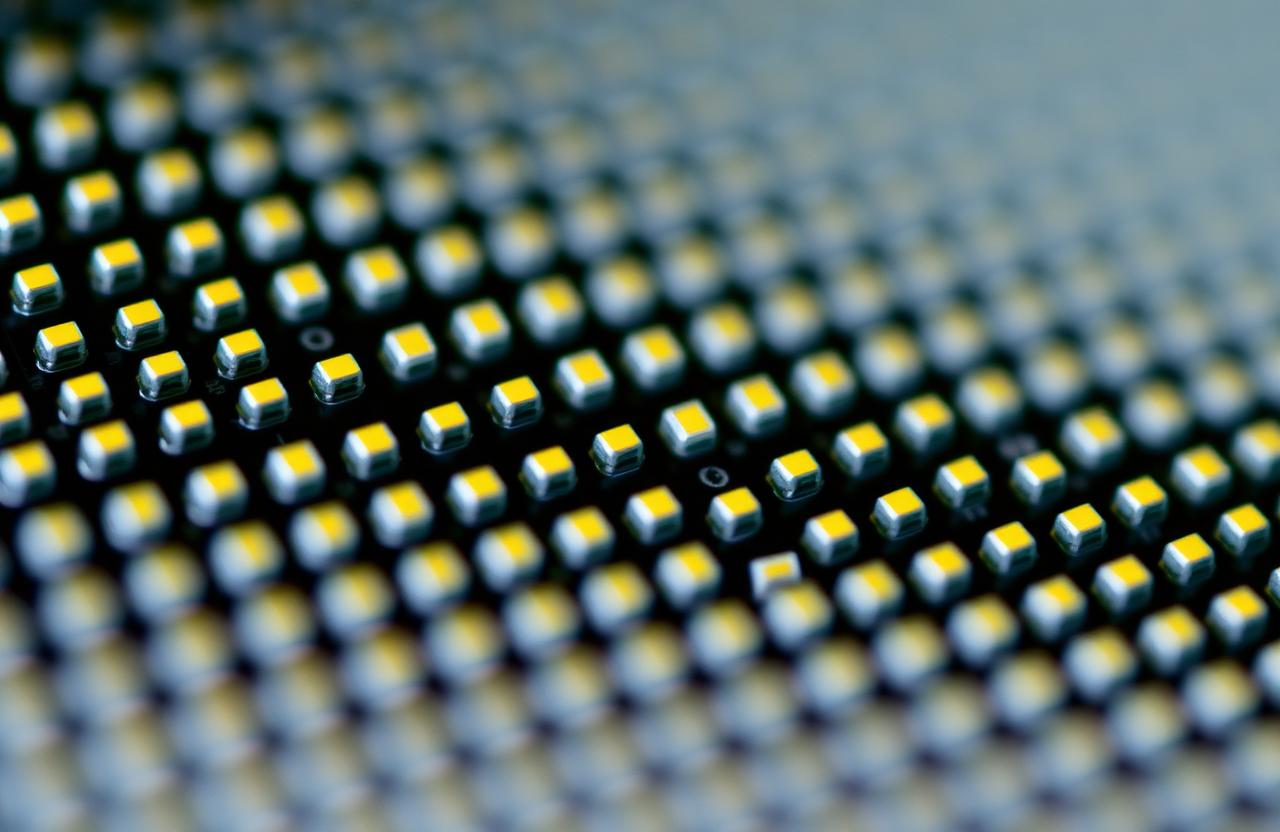
Pixel pitch is the one number that drives resolution, viewing distance, cabinet count and roughly 60% of the budget of an LED video wall. Get it right and everything else follows; get it wrong and no amount of processing or content will save the wall.
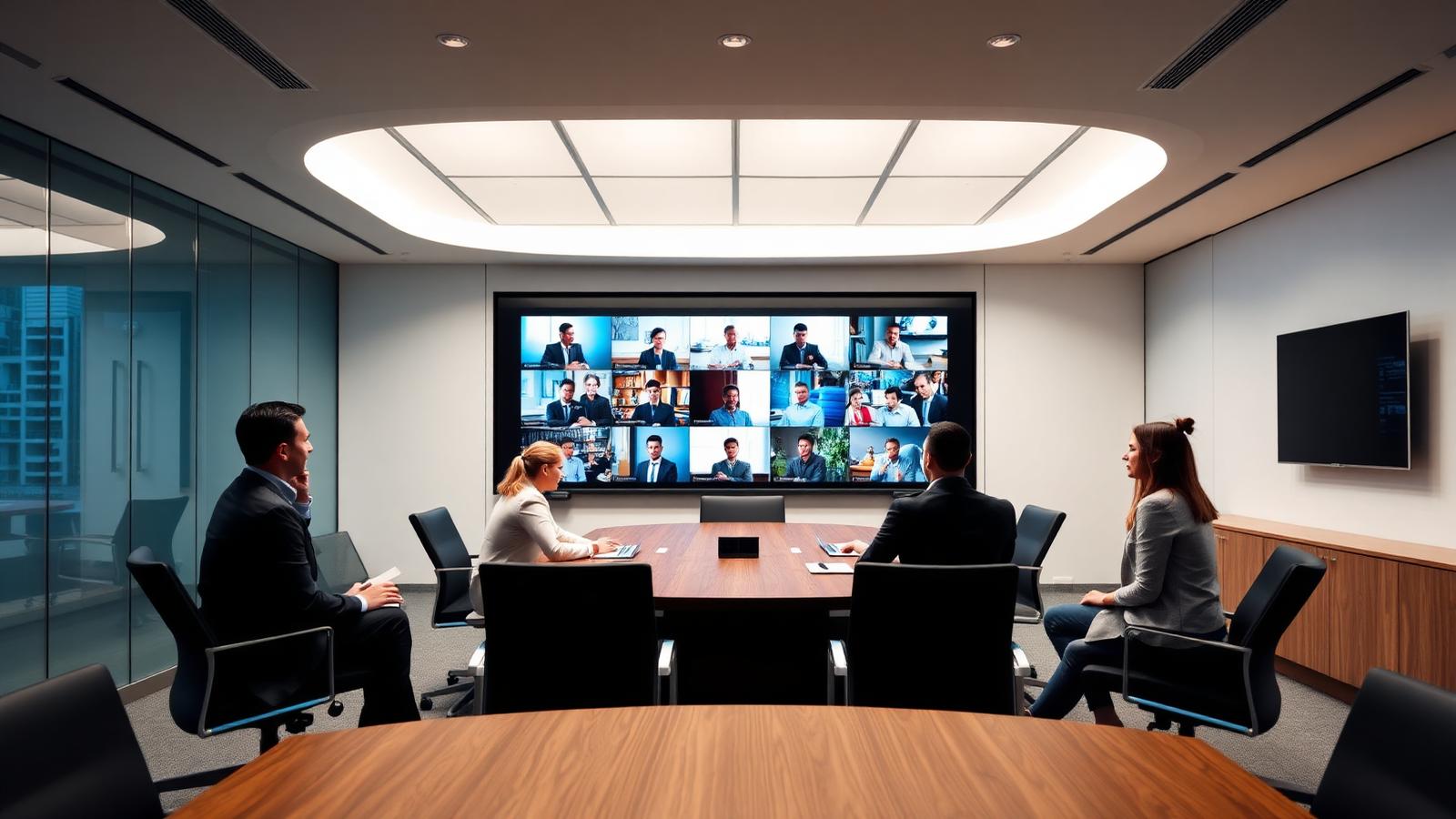
P1.5 at 2 m — the pixel grid is invisible to the seated viewer.
Quick answer
Pixel pitch is the centre-to-centre distance between adjacent LED pixels in millimetres. The practical rule: minimum comfortable viewing distance in metres ≈ pixel pitch in mm. So P1.5 suits viewers from 1.5 m, P2.5 from 2.5 m and P6 from 6 m. Resolution = wall width ÷ pitch, so a 6 m wide P1.5 wall is 4000 pixels across.
What Pixel Pitch Actually Measures
Pitch is the distance in millimetres from the centre of one pixel to the centre of the next. A smaller number means more pixels per square metre, more driver ICs, more power supplies and a higher price — the cost curve is closer to exponential than linear as pitch drops.
The viewing-distance rule
Minimum comfortable viewing distance in metres roughly equals pitch in millimetres. It comes from human visual acuity (about one arc-minute) and it is conservative in a good way — content is comfortable at that distance and flawless beyond it. Specify against your closest regular viewer, not the average.
The resolution rule
Horizontal pixels = wall width in mm ÷ pitch. A 5,000 mm wide P2.5 wall is 2,000 pixels across — full HD, not 4K. This is why 4K on an LED wall is a width question before it is a budget question.
P0.9 vs P1.2 vs P1.5 vs P1.9 vs P2.5 vs P4 vs P6
The same table our engineers use on site. Read it against your closest seat first, then check the resulting wall width fits the architecture.
Three real specification patterns we repeat across projects in Hyderabad and Vijayawada.
Pitch selection worked examples
Room
Closest viewer
Chosen pitch
Why
12-seat boardroom, 4.5 m table
2.0 m
P1.5
Comfortable at 2 m; wall width 3.5 m gives 2,300 px — enough for spreadsheets
Bank NOC, operators at desks
1.3 m
P1.2
Dense dashboards read at desk distance; 24×7 duty needs low junction temperature
College auditorium, 400 seats
6 m
P3
Front row at 6 m; finer pitch would be invisible and add ~40% cost
Mall façade, footpath viewing
12 m
P8 outdoor
Distance viewing at 6,500 nits; IP65 cabinets
Common Pixel Pitch Mistakes
Each of these has cost a client real money on a project we were later asked to review.
Buying the finest pitch the budget allows, in a room where nobody sits close enough to see it
Forgetting that pitch × 3840 sets the width needed for genuine 4K
Choosing pitch before measuring ambient light — brightness and pitch are separate specifications
Ignoring cabinet dimensions, so the chosen pitch cannot tile exactly into the available wall
Mixing pitches across a single visual surface, which never calibrates to a uniform look
Who Engineered This Page — Experience, Expertise & Accountability
LiveInSmart Technologies is a commercial-AV and LED display system integrator, not a box reseller. Our own engineers run the site survey, structural and thermal calculation, pixel-pitch sizing, cabinet installation, receiving-card mapping, colour calibration and the AMC that follows. The guidance on this page is written from installations we commissioned and maintain across Telangana and Andhra Pradesh — indoor fine-pitch boardroom walls, high-brightness outdoor façades, 24×7 control rooms, auditorium stages and retail signage.
In-house AV engineering team — survey, structural drawings, load, thermal and power calculations
Genuine India-warranty cabinets with GST invoice, 3-year LiveInSmart installation warranty and structured AMC
Brand-agnostic specification across Unilumin, Absen, Hikvision, Samsung, Maxhub and Aaztec — chosen against your budget and redundancy needs, not a sales target
Two experience centres — Hyderabad (Ameerpet) and Vijayawada — with live LED walls you can audition before you buy
Get a Costed Design From an LED Engineer
Send us the space dimensions, closest viewing distance, ambient light level and the content you will run (dashboards, video, live camera, signage). Within two working days you get a designed configuration — pixel pitch, cabinet layout, controller, power and redundancy — with a line-item BOQ for pixel pitch selection, not a one-line price.
Book a free demo at the LiveInSmart Hyderabad Experience Centre — listen to Dolby Atmos, see 4K laser projectors and walk through live home-automation scenes before you buy.
Pancom Business Centre, Mumbai Hwy, Nagarjuna Nagar Colony, Ameerpet, Hyderabad 500073
It is the centre-to-centre distance between two adjacent pixels, measured in millimetres. P1.5 means 1.5 mm between pixel centres, which works out to about 444,444 pixels per square metre.
How do I calculate the right pixel pitch?+
Take the distance in metres from the wall to your closest regular viewer and use that number as the pitch in millimetres. A closest seat at 2.5 m means P2.5 is sufficient; anything finer is money spent on detail the eye cannot resolve at that distance.
Which is better, P1.2 or P2.5?+
Neither is better in the abstract. P1.2 is right when people sit within about 1.2 m; P2.5 is right at 2.5 m and beyond, and at the same wall size it typically costs 40–55% less. Matching the pitch to the room is what makes a wall look expensive.
Does a smaller pixel pitch mean a brighter display?+
No. Brightness (nits) is a separate specification set by the LED package and driver current. Fine-pitch indoor walls usually run 600–1,200 nits, while outdoor walls at P6–P10 reach 5,000–6,500 nits.
What pixel pitch do I need for 4K on an LED wall?+
Whatever pitch, multiplied by 3,840, gives your wall width. P1.2 needs 4.6 m, P1.5 needs 5.8 m and P1.9 needs 7.3 m of width to be genuinely 3840 pixels across.
Ready to upgrade your space?
Book a free, no-obligation demo at our Hyderabad or Vijayawada experience centre and hear it for yourself.