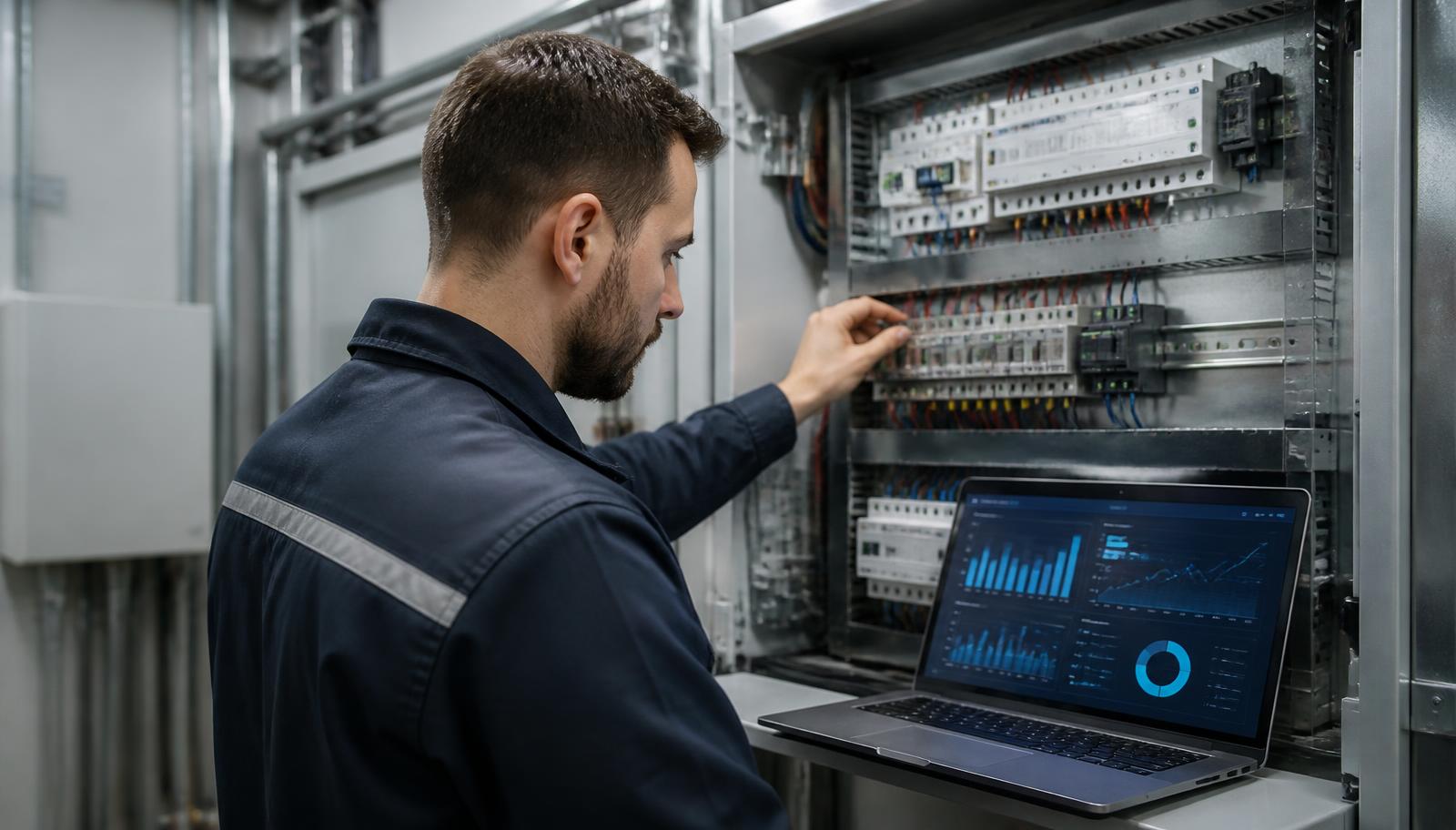
Engineer configuring a building automation control panel alongside an energy monitoring dashboard
    Commercial Automation · Energy Management

    Energy Management Systems for Commercial Buildings

    You cannot reduce a load you cannot see. An energy management system meters at feeder and equipment level, turns that into dashboards a facility team can actually act on, and then automates the schedules that remove waste — the measurement and the control together, not one without the other.

    Quick answer

    An energy management system (EMS) meters electricity consumption at incomer, feeder and equipment level, presents it as trends and benchmarks on a dashboard, raises alerts on abnormal consumption, and works with lighting and HVAC control to enforce schedules that cut waste. LiveInSmart designs and installs EMS for commercial buildings across India's southern markets, covering meter and CT selection, panel work, communication network, dashboards, reporting and AMC.

    Metering Depth Determines Usefulness

    A single incomer meter tells you the bill is high. Feeder-level metering tells you which floor, which tenant or which plant caused it — that is the difference between a report and an action.

    Metering levels and what each one lets you do
    LevelWhat It ShowsWhat You Can Do With It
    Incomer onlyTotal building consumption and demandTrack the bill, spot demand peaks
    Feeder levelConsumption per floor, tenant or panelAllocate cost, compare floors, find the outlier
    System levelHVAC, lighting, lifts, UPS separatelyTarget the biggest load first, verify schedule changes
    Equipment levelIndividual chillers, AHUs, large machinesDetect degradation and abnormal draw before failure

    From Dashboard to Actual Savings

    Monitoring alone changes nothing after the first month's curiosity wears off. Savings come from the loop between measurement and control.

    • Baseline first: measure normal consumption per zone and per hour before changing anything, so results can be proven later.
    • Kill out-of-hours running with schedules on lighting and HVAC — usually the single largest recoverable load in an office.
    • Set alerts on abnormal consumption so a stuck damper or a plant left running is caught in days, not in the next bill.
    • Benchmark comparable floors or branches against each other; the outlier almost always has a fixable cause.
    • Report monthly to a named owner — systems without an owner stop being read.

    Where EMS Fits With BMS and Automation

    EMS is the measurement and analytics layer; lighting, HVAC and BMS are the control layers. They are best deployed on one architecture so the same occupancy and schedule logic that drives control also explains the consumption data. Where a BMS already exists, we integrate metering into it rather than adding a second console for the facility team to ignore.

    Who Delivers This Work — Experience, Expertise & Accountability

    LiveInSmart Technologies is a commercial technology and integration partner, not a product dealer. The same in-house team runs the site audit, prepares the system design and itemised BOQ, installs and commissions the hardware, integrates it with the building's existing electrical and network infrastructure, trains the facility team, and carries the AMC afterwards. Everything described on this page reflects work we scope and support ourselves across Telangana and Andhra Pradesh — you can also see lighting, climate, AV and access control running live at our Hyderabad and Vijayawada experience centres before committing to a design.

    • Design → supply → installation → integration → commissioning → AMC → upgrades, under one accountable contract.
    • Itemised quotes: every controller, panel, sensor, cable run and labour line is listed — no lump-sum black box.
    • Integration-first: we work with the electrical contractor, IT team and interior designer already on your project.
    • Two experience centres (Hyderabad and Vijayawada) where systems can be demonstrated before sign-off.
    • Post-handover ownership: warranty support plus optional AMC with preventive visits and on-site engineers.
    Experience Centre · Hyderabad

    Visit our Hyderabad showroom

    Book a free demo at the LiveInSmart Hyderabad Experience Centre — listen to Dolby Atmos, see 4K laser projectors and walk through live home-automation scenes before you buy.

    Pancom Business Centre, Mumbai Hwy, Nagarjuna Nagar Colony, Ameerpet, Hyderabad 500073

    Frequently Asked Questions

    What is an energy management system in a commercial building?+

    It is a combination of energy meters, a communication network and software that records consumption at incomer, feeder and equipment level, then presents trends, benchmarks and alerts so facility teams can see where energy goes and verify the effect of any change they make.

    How much energy can a building save with an EMS?+

    That depends on your current schedules, occupancy patterns and plant condition, so we do not quote a fixed percentage. The system is designed to measure a baseline first precisely so the saving from each change is verifiable with your own data rather than estimated.

    Can an EMS be installed in an existing building?+

    Yes. Meters and CTs can be added into existing panels during planned shutdown windows, and communication can run over existing network infrastructure or wireless where cabling is impractical. Panel condition and space are assessed during the audit.

    Does an EMS require a BMS?+

    No. An EMS can run standalone for measurement and reporting. If a BMS exists, integrating the two is better because the same platform then shows consumption alongside the schedules and setpoints that cause it.

    Can tenants be billed individually from the system?+

    Yes, where metering is installed per tenancy. Feeder or tenant-level meters allow consumption to be allocated and reported per tenant, which is common in multi-tenant commercial buildings.

    Who maintains the system after installation?+

    We do, under warranty and an optional AMC covering meter and communication health checks, software updates, dashboard changes as the building evolves, and support for the facility team's reporting.